February 3, 2026

Black Surfers: A tribe for healing and liberation

Black Surfers: A tribe for healing and liberation


Introduction

This article will share some of the lessons learned from those who surf and teach surfing from a Black perspective and also identify what is beneficial for people to know about surfing. For many Black surfers in the USA, individual surfers from Hawaii, the East Coast and the West Coasts of the Continental USA, as well as organizations like the Black Surfing Association (BSA), and  Black Surfers Collective (BSC) members have been providing community in the water for decades. 

Over the last decade, e this time several organizations have developed such as the Black Girls Surf, Textured Waves, Color the Water, Black Like Water, Ebony Beach Club, Sol Fly Surf School, and othersetc.  There is even a Black Surf festival called a Great Day in the Stoke. Surfer Magazine (Howard, 2023) indicated that Black surfers are among the fastest growing population of surfers. 

Therefore, despite challenges noted byas Woods (2011) and Mesfin (2023) have challenged, Wheaton (2017) has acknowledged that, “although surfing’s imagery as a white, male, youthful, privileged activity and space is a relatively recent and contextually specific social construction, globally it has been, and remains the hegemonic one.” Nevertheless, Black people seek out opportunities to connect on the waves and they have resisted local and societal norms that excluded them (Gilberg, 2016; Robleza, 2025). 

Black Surfing as an Art

Black surfers, surfing is an art, which has both ancient and modern iterations of the activity that spiral through time. Ani (1994) writes, … art has a radically different significance in non-European cultures, where it is most often intimately bound with the sacralized pattern and existence of the total lifeways of the group. Because of this critical difference, the confrontation between the European and non-European art is a phenomenon of culture shock (p. 209).”

These ancient African cultural connections to the water are well established. Moreover, the first account of surfing in Africa was in the 1640s, well before surfing was described in Hawaii in the 1777 (Mesfin, 2023; Woods, 2011)., This does not take away from the Hawaiian influence on the modern version of the activity. yet that does not take away from the Hawaiian influence on the modern version of the activity,  Instead, it only highlights the diversity that exists in water activities. All surfers today owe a great deal to Hawaiians. 

Nobles (2006), writes about an experiential community, as the sharing of a particular experience by a group of people. Nobles goes on to state that the experiential community functions “to determine how the people will be, and concurrently, what ethos, or set of guiding beliefs, a people will follow. Given that a community is what gives life to what Nobles refers to  as Nobles goes on to assert as “tribes.” 

For those of us who find fellow Black surfers, we have found a significant experience among that tribe. Cross, Parham, and Helms (1991), helped to identify and strengthen our understanding of Black Identity Development. They emphasize that an encounter with a racist system in the USA can cause one to rethink their life and connection to others. 

In the early 1970s, the founder of the Black Surfing Association, Mr. Tony Corley sent a letter to Surfer Magazine looking for fellow Black surfers, and they published it. In spite of receiving significant hate mail, Mr. Corley connected with a few other surfers across the state of California (Trujillo, 2013). In the documentary film White Wash (Woods, 2011), noted surfer Rick Blocker says, “When I was young what I really wanted to be I believe was just a surfer.” Blocker goes on to state, “And it was just enough for the white boys to be just surfers the problem was I could never just be a surfer because I was always black (sic) you know.” For these Black surfers in California, connection was a big part of their surfing journey. This connection became –the Black surfing tribe.

Surfing as Healing Post-Apartheid

There is limited empirical research that centers Black people and surfing. However, much of what does exist, much of it has come from the area of the world known as South Africa (Azania). In the film Otello Burning (Blecher, 2011), and in real life for many Azanian people of Black heritage, surfing provided an outlet away from the volatile times they were living in.

 A valid critique of the film and the practice of supporting Black people who surfer are that they young people can be exoticised in a way that is exploitative (Thompson, 2014). Nevertheless, Thompson (2011) remains heartened that efforts have been made in Azaina to have promoters of the sport of surfing who, “demonstrate(s) a grassroots approach to changing surfing practices and opening up opportunities for surfing’s youth – and while promoting black (sic) surfing…” Thompson is also encouraged that the work will continue to, “offer paths toward racial redress in recognising the dignity and equality of black surfers on the beach.“

The previous apartheid system denied most black surfers access to the surf zone and other amenities such as swimming pools and swimming lessons (Grilbeg, 2016, p. 45).” Other obstacles such as limited transportation, the stories of danger in the ocean from family and community members, lack of money to get equipment may keep Black boys from learning to surf. 

However, Grilberg’s study goes on to highlight psychological factors among the surfers such as the willingness to defy convention, resilience despite roadblocks, and the joy of destroying stereotypes. Moreover, what kept the Black boys who are surfing into manhood was the chance to reclaim space, find therapeutic peace, and develop ing skills in the surf, as well as accepting challenges in life to get along with others who are a regular part of surf culture.

The Black Surfing Collective & Teaching Black Surfing

For many college age students, “levels of interest in outdoor recreation still appear to be lower among African Americans when compared to White student peers (Howard, 2017). Addressing issues related to stigma is an important part of Black surfing.

 For the lessons taught by the Black Surfers Collective (BSC), there is a much larger range of age groups, from 3 to 63+ years old who take lessons for the first time. Moreton et al (2022) have found that there can be significant benefit to people who learn to surf, specifically in their study of documented efforts by surf instructors to work with “Veterans and/or at-risk youth.” 

Although this research is new, the it highlights the psychotherapeutic benefits of transcendent experiences. No matter the wave size or shape, the question of transcendence is about the surfer’s ability to find meaning in the moment and beyond that immediate experience. For Benninger et al (2020), in their study of surfing programs that target strong mental health outcomes they recommend that family involvement will promote learning surfers to return to participate via clubs and removing socioeconomic barriers.

More practically, in the past decade we have learned to provide an experience that is intentional, safe, and meaningful. More recently, as an educational psychologist, I have shared with our board members’ ways for the BSC instruction to add a component that provides transcendence, that is aligned with the literature. The questions usually are as follows:  “What went as you expected and what was different?” In these moments, they come to terms with how they moved past any notions or worse, any stigmas, and what their new reality is as a surfer. What the BSC has come up with is a “magnified moment”, which is in alignment with a Comley’s study (2018). Taking time to highlight the experience via a time to share their story and to be validated to return back to the tribe of surfers. 

Black Surfers Lessons Learned and Recommendations for 2026

  • Remember as Nobles (2026) reminds us, Unlike Western philosophical systems, the African philosophical tradition does not place heavy emphasis on the “individual…” It recognizes that “only in terms of other people does the individual become conscious of his own being. Only through others does one learn his dues and responsibilities towards himself and others… A cardinal point in understanding the traditional African’s view of himself, his self-concept is that he believes, “I am because we are; we are, therefore, I am (p. 14).”
  • Recognize the range of Black people’s possibility, especially in their expression of the art of surfing (Ani, 1994)
  • Honor the ancestors, especially those who surfed the waters before you.
  • Respect the line-up of surfers in the water and the diversity within. As long as we are safe and enjoying the moments, there is great possibility. 
  • Sustain and respect the ocean. Make the ocean and beach cleaner than when you left. Remember, that at any moment the water can be dangerous. 
  • Know that you have a responsibility to embody and respect your new identity as a Black surfer. You are a part of a tribe. Some do not accept this identity. However, those of us that do, know the obligation we have to other Black surfers and we take it seriously. 
  • Keep fighting. According to Barjolin-Smith (2025), organizations such as Black Girls Surf have made an impact in breaking down system barriers to surfing, and there is still much more work to do. 


References

Ani, M. (1994). Yurugu: An African-centered critique of European cultural thought and behavior. Africa World Press. 

Barjolin-Smith, A. (2025). Surfing as a Vehicle for Diversity, Inclusion, and Empowerment: Riding the Waves of Change. In Diversity, Equity, and Inclusion in the Global Sport Community (pp. 139-158). Routledge.

Benninger, E., Curtis, C., Sarkisian, G. V., Rogers, C. M., Bender, K., & Comer, M. (2020). Surf therapy: A scoping review of the qualitative and quantitative research evidence. Global journal of Community Psychology practice, 11(2). https://journals.ku.edu/gjcpp/article/view/20670

Blecher, S. (2011). Otelo Buring [Film]. https://www.imdb.com/title/tt1986926/

Comer, K. (2016). ” We’re blacksurfing”: public history and liberation politics in White Wash. Journal of American Ethnic History, 35(2), 68-78. https://www.jstor.org/stable/10.5406/jamerethnhist.35.2.0068

Cross, W. E., Jr., Parham, T. A., & Helms, J. E. (1991). The stages of Black identity development: Nigrescence models. In R. L. Jones (Ed.), Black psychology (3rd ed., pp. 319–338). Cobb & Henry Publishers.

Comley, C. A. (2018). ” Surfing? That’s a White Boy Sport”: An Intersectional Analysis of Mexican Americans’ Experiences With Southern California Surf Culture (Doctoral dissertation, University of Oregon). https://search.proquest.com/openview/11072e0c9a9ebb2e8ab0cb6c7e55684e/1?pq-origsite=gscholar&cbl=18750&diss=y

Gilberg, J. P. Y. (2016). Young Black Men’s Psychological Experience of Surfing in Post-apartheid South Africa (Doctoral dissertation, University of South Africa). https://www.academia.edu/download/53081299/JPY_Gilberg_surfing_thesis____Final_final_Print3.pdf

Howard, J. (September 28, 2023). African American, Hispanic Surfing Participation On The Rise. Surfer Magazine. https://www.surfer.com/culture/african-american-hispanic-participation-surfing-sharp-rise 

Howard, K. P. (2017). Race, Identity, and Belonging: Examining the Importance of Recreational Sport in the Lives of African American Students at Historically White Institutions (Order No. 10758883). Available from ProQuest Dissertations & Theses Global: The Humanities and Social Sciences Collection. (2015703071). http://libproxy.lib.csusb.edu/login?url=https://www.proquest.com/dissertations-theses/race-identity-belonging-examining-importance/docview/2015703071/se-2

Mesfin, D. (2023). Wade in the Water: A Journey into Black Surfing and Aquatic Culture [Film]. https://wadeinthewaterproject.com/ 

Moreton, S. G., Brennan, M. K., Nicholls, V. I., Wolf, I. D., & Muir, D. L. (2022). Exploring potential mechanisms underpinning the therapeutic effects of surfing. Journal of Adventure Education and Outdoor Learning, 22(2), 117–134. https://doi.org/10.1080/14729679.2021.1884104

Nobles, W. W. (2006). Seeking the Sakhu: Foundational writings for an African psychology. Third World Press. 

Robleza, E. (2025). Resistance through surfing by Black, Indigenous, and People of Color communities. Journal of Occupational Science, 1–14. https://doi.org/10.1080/14427591.2025.2482965

Thompson, G. (2011). Reimagining Surf City: surfing and the making of the post-apartheid beach in South Africa. The International Journal of the History of Sport, 28(15), 2115–2129. https://doi.org/10.1080/09523367.2011.622111

Thompson, G. (2014). “Otelo Burning” and Zulu surfing histories. Journal of African Cultural Studies, 26(3), 324–340. http://www.jstor.org/stable/24758709

Trujillo, C. (February 12, 2013).  Tony Corley: Evolution of the Black Surfing Association [News Stroy] https://www.pbssocal.org/shows/artbound/tony-corley-evolution-of-the-black-surfing-association

Woods, T. (Director). (2011). White Wash [Film]. Trespass Productions.  https://www.imdb.com/title/tt1326905/?ref_=ttpl_ov_bk

Wheaton, B. (2017). Space invaders in surfing’s white tribe: Exploring surfing, race and identity. https://researchcommons.waikato.ac.nz/items/0fd46c3f-d910-477a-83f3-e0cd2f02ba4b

Author

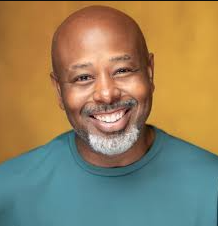
  • Dr. Brandon Gamble received his training in psychology from Oakwood College for his Bachelor's degree, San Diego State for his Master's degree, and the University of Southern California is where he earned his Doctoral degree in Educational Psychology.

    Currently, he serves as the inaugural Director for the Office of Black Student Success at Cal State University San Bernardino. He also serves as the Western Regional representative of the Association of Black Psychologists (ABPsi).

Previous Article

Lighting the Kinara Beyond the Season

Next Article

Re-envisioning Interdisciplinary Labs as Research Homes

You might be interested in …

Nakumbuka: I remember

Nakumbuka: I remember

Nakumbuka is a Kiswahili word that means I remember. Nakumbuka is the name given to the annual day of observance for the Maafa (The African slavery holocaust). Jomo Nkombe, a Tanzanian who lived in Canada, pioneered the idea of nakumbuka as a public ritual in 1990. From early youth, Nkombe […]

Family, Freedom, and the Power of Gratitude

Family, Freedom, and the Power of Gratitude

Gratitude is often spoken of in fleeting terms, an emotion reserved for the dinner table or a holiday toast. But for many post-incarcerated Black men and women, gratitude carries a weight far greater than a polite “thank you.” It becomes a radical act of healing, a form of resistance, and […]

Leave a Reply