World Suicide Prevention Day, September 10
“Be strong.” “Keep going.” “Do not let people see you break.” These words can sound like care to many black people. These words can also mean that, whatever hurts, hold it. For people who have endured enslavement across generations, colonization, racism, and exclusion, there has often been an urgency to endure for survival. However, on World Suicide Prevention Day, we ask what happens when strength is understood only as the ability to suffer quietly?
Suicide is not a distant problem. According to a report by the World Health Organization (WHO), in 2021, about 73% of suicides worldwide happened in low- and middle-income countries, and this resulted in 727,000 suicides (WHO, 2025). More recent work with Black African communities also highlights how stigma, fear of judgment and notions of strength can make starting discussions about mental health challenging (Degge et al., 2025). The problem is not resilience itself. The problem starts when resilience is equated with silence.
My ancestors survived worse. I should be able to handle this.
In this thought, pride is seen, but the truth remains that this thought also brings danger. Joseph White identified seven such strengths of character in Black people: improvisation, resilience, connectedness to others, spirituality, emotional vitality, gallows humor, and a healthy suspicion of dominant power structures (White, 1984; Cokley et al., 2019). These strengths were never a command to carry everything alone. In fact, resilience goes hand in hand with connectedness and spirituality. In White’s opinion, strength is bigger than endurance.
This tension is evident in gallows humor. Black people will make something funny out of difficult times, so much so that what is so painful becomes a joke good enough to be a reason for moving. Humor is a bond that can unite, and it can make a tough moment pass by easily. But for how long can a joke be a joke when no one is allowed to name it as a joke? One person can be many things: funny, faithful, productive, and still struggling. Suicide prevention is about noticing the pain that can hide behind the idea of being “fine.”
Resilience should not mean silence. It is possible to survive and say, ‘I need some help.’
Here is another perspective on healing from Na’im Akbar. Speaking in the documentary Toward a Black Psychology, in his own words, “The goal of becoming a human being is to find the connections” (Utsey, 2018). This thought takes me to Ubuntu. Ubuntu is often expressed as “I am because we are”; therefore, Ubuntu places the person in relation to family, community, spirit, and others (Mugumbate & Chereni, 2020). Healing when a relationship is suffering should not be regarded as a private assignment.
Maulana Karenga’s Nguzo Saba adds Umoja (unity) and Ujima (collective work and responsibility). Both call us to pay attention to the community (Karenga, n.d.). In suicide prevention, it can mean making family, churches, schools, friendship clubs, barbershops, and other safe places where “I am not okay” does not lead to ridicule, gossip, or shame. Research on Black faith communities indicates that intentionally using trusted religious environments can support mental health education and reduce mental health stigma (Codjoe et al., 2021).
Faith can provide purpose, hope, and belonging, but it cannot close the conversation. Culturally relevant psychoeducation can raise awareness among people about warning signs for suicide, help them understand that experiencing suicidal distress is a serious concern, and remind them where they can access support. Research on suicide among African American youth also identifies racial pride, family, community support and culturally based means of coping as protective resources (Robinson et al., 2022). We need to give one another permission to seek help before pain becomes a crisis.
Perhaps the narrative we need to change is not that Black people are resilient, because indeed black people are resilient. Instead, we need to change the thought that Resilience is silence. Vulnerability does not erase strength. Speaking is not a disrespect to our forefathers. Seeking help may be a way of survival, and responding to the call can be an act of community.
References
Belonogova, D. (n.d.) Female Advocate Holding a White Placard [Photograph]. Pexels. Available at: https://www.pexels.com/photo/female-advocate-holding-a-white-placard-8385163/ (Accessed: 7 September 2026).
Codjoe, L., Barber, S., Ahuja, S., Thornicroft, G., Henderson, C., Lempp, H., & N’Danga-Koroma, J. (2021). Evidence for interventions to promote mental health and reduce stigma in Black faith communities: Systematic review. Social Psychiatry and Psychiatric Epidemiology, 56(6), 895–911.https://doi.org/10.1007/s00127-021-02068-y
Cokley, K., Palmer, B., & Stone, S. (2019). Toward a Black (and diverse) psychology: The scholarly legacy of Joseph White. Journal of Black Psychology, 45(2), 112–121.https://doi.org/10.1177/0095798419828243
Degge, H. M., Masamha, R., Daniels, A., & Onukwugha, F. (2025). Stigma, silence and strength: A co-produced inquiry into mental health conversations in Black African communities in the UK. Journal of Racial and Ethnic Health Disparities. Advance online publication.https://doi.org/10.1007/s40615-025-02669-2
Karenga, M. (n.d.). Kwanzaa. Retrieved September 7, 2026, fromhttps://maulanakarenga.org/kwanzaa/
Mattési, K. (n.d.). [Untitled image] [Image]. Pinterest. https://www.pinterest.com/pin/188940146863094834/
Mugumbate, J. R., & Chereni, A. (2020). Editorial: Now, the theory of Ubuntu has its space in social work. African Journal of Social Work, 10(1), v–xv.https://doi.org/10.4314/ajsw.v10i1
Robinson, W. L., Whipple, C. R., Keenan, K., Flack, C. E., & Wingate, L. R. (2022). Suicide in African American adolescents: Understanding risk by studying resilience. Annual Review of Clinical Psychology, 18, 359–385.https://doi.org/10.1146/annurev-clinpsy-072220-021819
Sun Bee. (2026). Silence is violence: A family reflection. Vocal Media. https://vocal.media/poets/silence-is-violence-a-family-reflection
Utsey, S. O. (Director). (2018). Toward a Black Psychology: Origin & evolution of a discipline [Documentary]. Virginia Commonwealth University, Department of African American Studies.https://search.alexanderstreet.com/preview/work/bibliographic_entity%7Cvideo_work%7C3997013
White, J. L. (1984). The psychology of Blacks: An Afro-American perspective. Prentice-Hall.
World Health Organization. (2025). Suicide worldwide in 2021: Global health estimates. World Health Organization.https://www.who.int/publications/i/item/9789240110069
Author
-
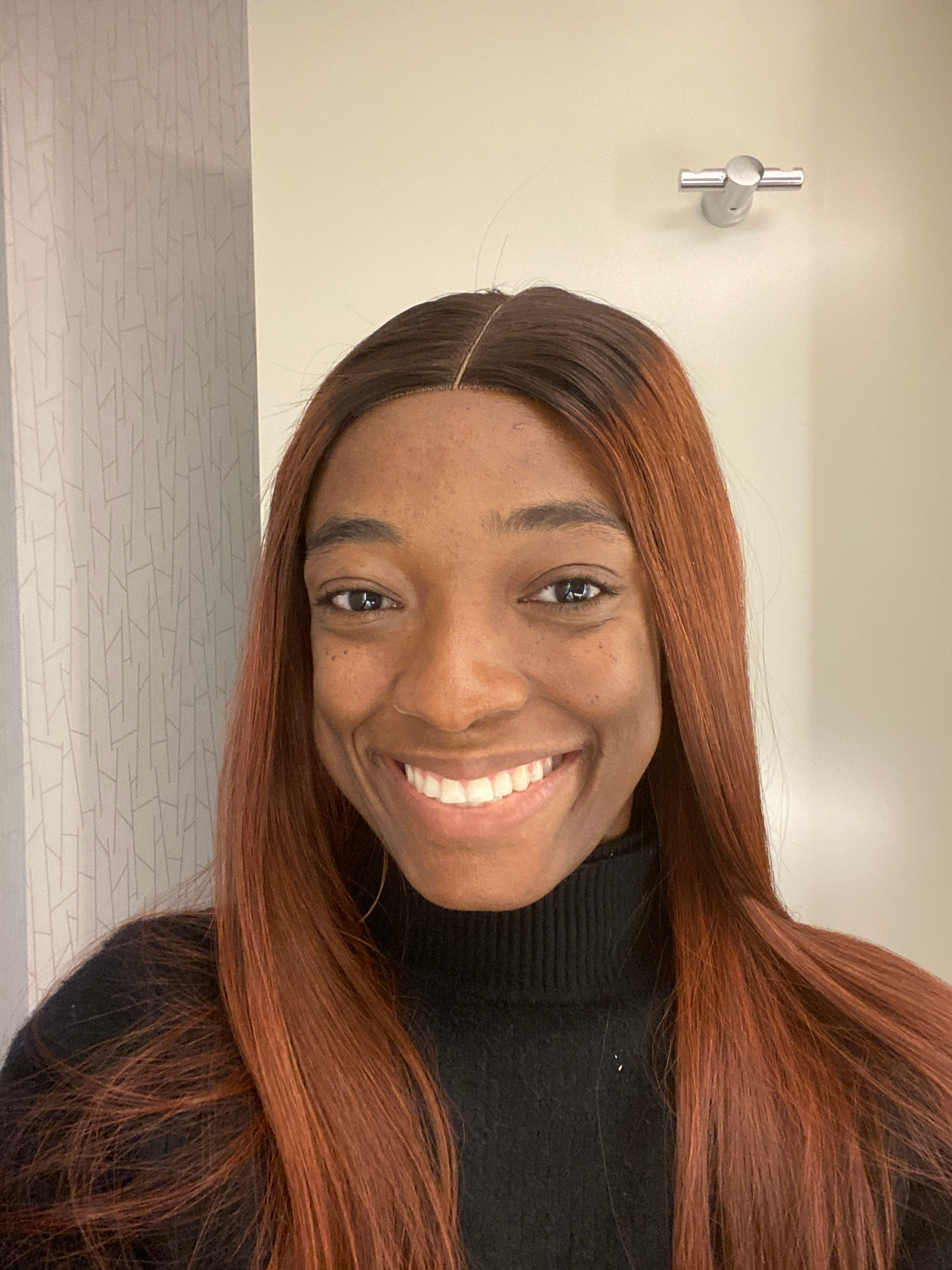
Francisca A. Allename, MSW, is a first-year PhD student in Counseling Psychology at Auburn University, interested in the racialization experiences of African immigrants and their impact on mental well-being. On a broader note, she seeks to understand how the enduring legacies of enslavement and colonialism continue to influence mental health across Black communities.