August 27, 2026

Freeing the African Spirit: Reflections on Balance, Ancestors, and Becoming

Freeing the African Spirit: Reflections on Balance, Ancestors, and Becoming

Attending the Association of Black Psychologists’ 57th Annual International Convention at Morgan State University in Baltimore felt different to me this year. The convention theme, “The Illumination: Freeing the African Spirit,” invited us to reflect not only on what we know as psychologists, scholars, students, and healers, but also on who we are becoming. I arrived at the convention during a season of transition: newly elected as the Midwest Regional Representative, carrying the memory of the loss of Distinguished Psychologist Dr. Suzette Speight, who introduced me to ABPSi as a student, reconnecting with people who helped shape my professional life, and confronting my need to practice the balance I so often encourage in others.

I had planned to present a session with Dr. Alesia Richardson, Chairperson of the Department of Psychology and Counseling at Chicago State University, titled “Black Woman Balance Your Spirit: Announce, Denounce, then Bounce.” The conference committee accepted our proposal, but because I did not register by the deadline, my name and our presentation did not get included in the final program. There was an unmistakable irony in preparing to speak on balance while failing to operate from a place of balance myself.

It was a revealing lesson: knowing what sustains us is not the same as consistently practicing it.

That disappointment also opened an unexpected opportunity. Rather than attending the convention primarily as a presenter, I experienced it from a new perspective as the newly elected Midwest Regional Representative. I am proud to serve in this role and confident that decades of leadership, clinical practice, scholarship, and service have prepared me. My relationship with ABPsi spans more than thirty years, during which I have served the Association in local, regional, and national roles. My professional work has also centered on culturally responsive mental health care, education, research, community service, and leadership. In many ways, this convention helped me see those experiences not as isolated achievements but as components of an ongoing process of growth.

One of the most meaningful reflections came through a conversation after the convention with Dr. Obari Cartman, author of Black Spirituality and immediate past president of the Chicago Chapter. Dr. Cartman had previously asked me to read his manuscript before publication, and I was intrigued from the very first line of the prelude: “My mother was Christmas. My father was Kwanzaa.” That sentence stayed with me because it named a tension I understood. In my earlier years in ABPsi, I sometimes wondered whether I was “too mainstream” or African-centered enough. With maturity, I have become better able to accept the diversity of how Black people understand culture, spirituality, healing, identity, and belonging.

Reading Dr. Cartman’s work on the plane to the convention also led me to think about each chapter as a reflection of where he was at a particular point in his own healing and spiritual development. That idea permitted me to look at my own life in the same way post-convention.

We do not arrive at one permanent understanding of ourselves. We grow, revise, release, and return. Our professional identities advance alongside our spiritual lives. What we believe at one stage may need to be expanded at another.

This was especially true for me during the convention’s ritual ceremony, in which we pay homage to the ABPsi ancestors. I have attended the Tribute Ceremony at prior ABPsi gatherings, but this one held new meaning because of my mentor Dr. Suzette Speight’s transition. Grief changed the experience. The ceremony moved from something I had witnessed to something I needed. It invited me to think more deeply about ancestors, memory, and the ways those who have poured into us continue to shape our lives.

One elder offered tangible guidance about creating an ancestor altar: white to represent the ancestor realm, along with a plant, water, and pictures of loved ones. The elder encouraged us to call on our ancestors and allow them to speak to us. For me, this required spiritual stretching. I was raised within traditional Christian doctrines that can too quickly judge practices outside familiar expressions as idolatry. My own spiritual growth has required me to question those assumptions and to consider that honoring ancestors can be an act of remembrance, gratitude, continuity, and healing rather than worship.

Another statement from a panel member at the final Mbongi: The Illumination: Spirit in Reality, was similarly profound: “We are now the vessels through which ancestors work best.” I do not remember which panelist said it, but I remember what it awakened in me. If those who came before us invested wisdom, love, discipline, sacrifice, and vision into our lives, then one of the most faithful ways to honor them is to live in a manner that extends their work.

The elder’s words, “Take what I gave you and make it better,” captured that responsibility. Legacy isn’t repetition. It is stewardship, growth, and transformation.

That reflection also inspired me to begin a new tradition of intentionally reconnecting with mentors and elders who are still with us. I thought of Dr. Carolyn Moore, my first supervisor after I earned my Ph.D., whose Jegnaship was invaluable to my early career development. Reconnecting with her reminded me that mentorship does not end when we are no longer new professionals. There is value in returning to those relationships with greater maturity, gratitude, and openness to what they still must teach us, while also allowing them to grow into collegiality and friendship.

The convention also helped me see my professional development more clearly. Over the years, the roles I have held as a psychologist, educator, researcher, administrator, jegna, community servant, practice owner, and ABPsi member have formed the philosophy behind my private practice, Healing, Empowering and Learning Professionals (HELP) LLC. Those first three words are not simply a business name. They represent a process.

Healing allows us to attend to pain. Empowering helps us restore agency. Learning gives us the tools to grow, adapt, and make meaning. Together, they reflect much of what I have learned through both psychology and community.

The message I had hoped to share in our convention presentation became a message I needed to receive myself. In “Black Woman Balance Your Spirit,” we described well-being as a balance of mind, body, and spirit. When one area is neglected, functioning suffers. We also offered a simple framework: Announce, Denounce, then Bounce. Pay attention to how people and environments announce themselves. Denounce what repeatedly leaves you demeaned, unheard, unsafe, or spiritually heavy. Then make the conscious decision to bounce from relationships and spaces that do not feed your spirit.

The goal is not avoidance; it is discernment. Protecting spiritual space can create room for healthier functioning, clearer purpose, and the ability to soar.

My greatest takeaway from the 2026 convention is that professional development and spiritual development do not have to travel on separate tracks. As psychologists and health care professionals, we are trained to care for others, interpret systems, develop interventions, teach, lead, and respond. Yet we must also examine the condition of our own spirits. Students and emerging professionals need permission to grow without having to prove they are “enough” in every room.

Established professionals need permission to grieve, reconnect, reconsider old assumptions, and receive wisdom from elders. Leaders need to remember that balance is not a topic we present; it is a discipline we practice.

So I leave the convention with a thankful heart, humility, and a strengthened commitment to living what I teach. Practice healing yourself. Honor those who came before you. Reconnect with those who helped shape you. Pay attention to what enters your space. Protect your mind, body, and spirit. “Take what your elders gave you and make it better.”

Author

  • Karen McCurtis-Witherspoon

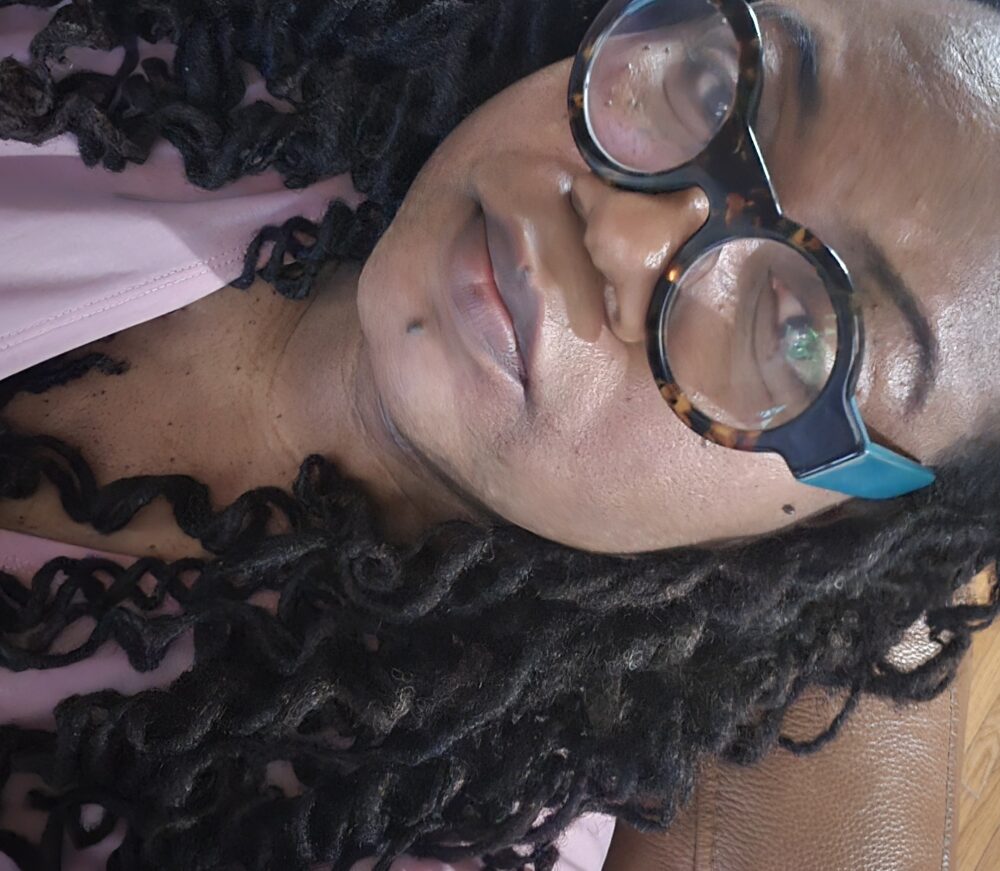
    Dr. Karen Witherspoon serves as Chief Clinical Officer of H.E.L.P. LLC and Midwest Regional Representative of the Association of Black Psychologists.

Previous Article

When Survival Looks Like Smiling: Black Women, Autism, and the Cost of Layered Masking

You might be interested in …

The New PsychDiscourse

The New PsychDiscourse

By: Shareefah Al’ Uqdah, Ph.D, Psychdiscourse Editor In Chief Before and throughout Covid-19, ABPsi has held a special place for Black psychologists. Since our founding, ABPsi has created ways to galvanize and inform the community of unique issues relevant to Black people’s mental health. One way in which ABPsi communicated […]

Leave a Reply